Atlas Brevior
Jorge Luis Borges once joked that an empire’s cartographers became so obsessed with accuracy they produced a map as large as the empire itself. Perfect fidelity, zero usefulness. They abandoned the thing in the desert, where it slowly rotted away.1
Science can look like it’s trying to build that giant map. It wants to account for everything, explain everything, predict everything. But unlike Borges’s cartographers, science can’t actually copy the world at full resolution. It can at most aspire to creating a compressed version that still lets us recover the bits we care about. Think of a video file. The raw footage is enormous, but an mp4 shrinks it down while preserving the structure needed to rebuild the moving image at an acceptable resolution. The missing pixels aren’t ‘wrong’; they’re irrelevant because the codec knows what to preserve and what to ignore.
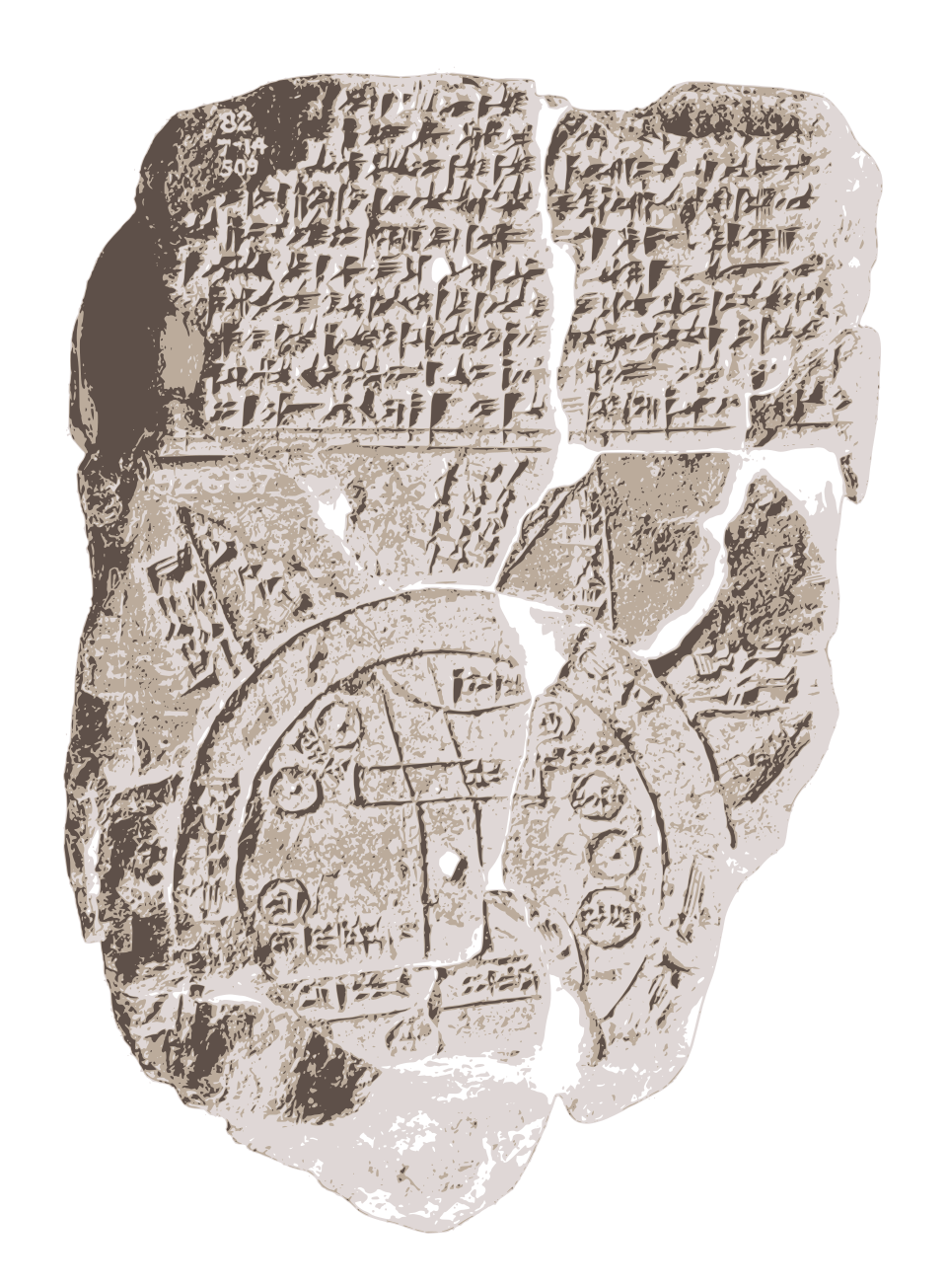
Every science works like this. Each field has its own ‘codec’—a way to take messy reality, boil it down to a handful of parameters, and apply a set of generative laws that rebuild the behaviour you’re interested in. Physics has its dynamical equations. Chemistry has reaction mechanisms. Biology has regulatory networks. Social science has structural models. None of these are faithful, pixel-by-pixel reconstructions of the world. As codecs, they discard most of the noise and keep only the structural pieces that let you reconstruct the pattern.
Sometimes, by chance, the simpler codec gives you a sharper reconstruction than a more elaborate one. When this happens, it’s a kind of intellectual compression miracle: fewer assumptions, fewer parameters, yet a higher-resolution understanding. This is Ockham’s razor. Simplicity isn’t automatically superior, however. Some domains are simply too tangled and, in consequence, a simple codec would lose essential information. In those cases, you need a more complex model to keep the pattern intact and, therefore, following Ockham’s razor would actually be counterproductive.2
And then there’s a deeper point that often gets lost. Just because a codec works brilliantly for us does not mean the universe ‘uses’ that codec to generate itself. The universe isn’t compressing or decompressing anything. It’s not calculating equations or running models. It simply unfolds according to whatever its actual microdynamics are. Our codecs are tools we build to make sense of those dynamics without tracking them in all their overwhelming detail. When a codec succeeds, it’s a victory for our ability to spot structure, not a revelation of the universe’s internal programming.
Some parts of the world are still too complex for us to compress, but that doesn’t make them random; it just means we haven’t managed to find a codec that captures their structure in a tractable way. The limitation is, thus, cognitive, not cosmic.
References
Footnotes
The Spanish title of the tale is Del rigor en la ciencia. It can be found in Andrew Hurley’s translation as On Exactitude in Science.↩︎
See for example the argument of Dubova et al. (2025). See also Baker (2022).↩︎