The problem with the usual defence of the Humanities
For years now, one of the most common defences of the humanities has gone something like this: we need them because they foster critical thinking and ethical commitment, and without them society would slide into shallow technocracy or outright barbarism. At first glance, that sounds reasonable, even reassuring, but once you slow down and look more closely, the claim starts to wobble.
To begin with, critical thinking and ethics are not owned by any one academic tribe. STEM fields train critical thinking every day through modelling, testing, debugging, peer review, and working under hard constraints where being sloppy simply does not fly. They also deal with ethics in a very concrete way, because mistakes can break systems, hurt people, or scale up fast. At the same time, many humanities programmes talk a great deal about critical thinking and ethics while quietly rewarding ideological alignment and rhetorical compliance, especially when most professors share the same worldview and students are trained to signal belonging rather than push back. But true critical thinking is all about having an empiricist’s frame of mind, ie, treating the real world, not ideology (whether one promoted by a humanities professor or by a STEM die-hard), as the ultimate source of truth.
Another issue is that much of the ‘critical thinking’ developed in the humanities tends to stay boxed in. Departments splinter into subcultures, each with its own language, assumptions, and sacred texts, and students often learn how to think critically inside those narrow lanes without learning how to carry those skills over into other domains. As a result, a graduate may be very sharp when analysing a specific tradition or theory, yet oddly helpless when faced with problems outside that bubble. Transferable critical thinking usually comes from being forced to move back and forth between very different ways of thinking, not from going deeper and deeper into a single pool.
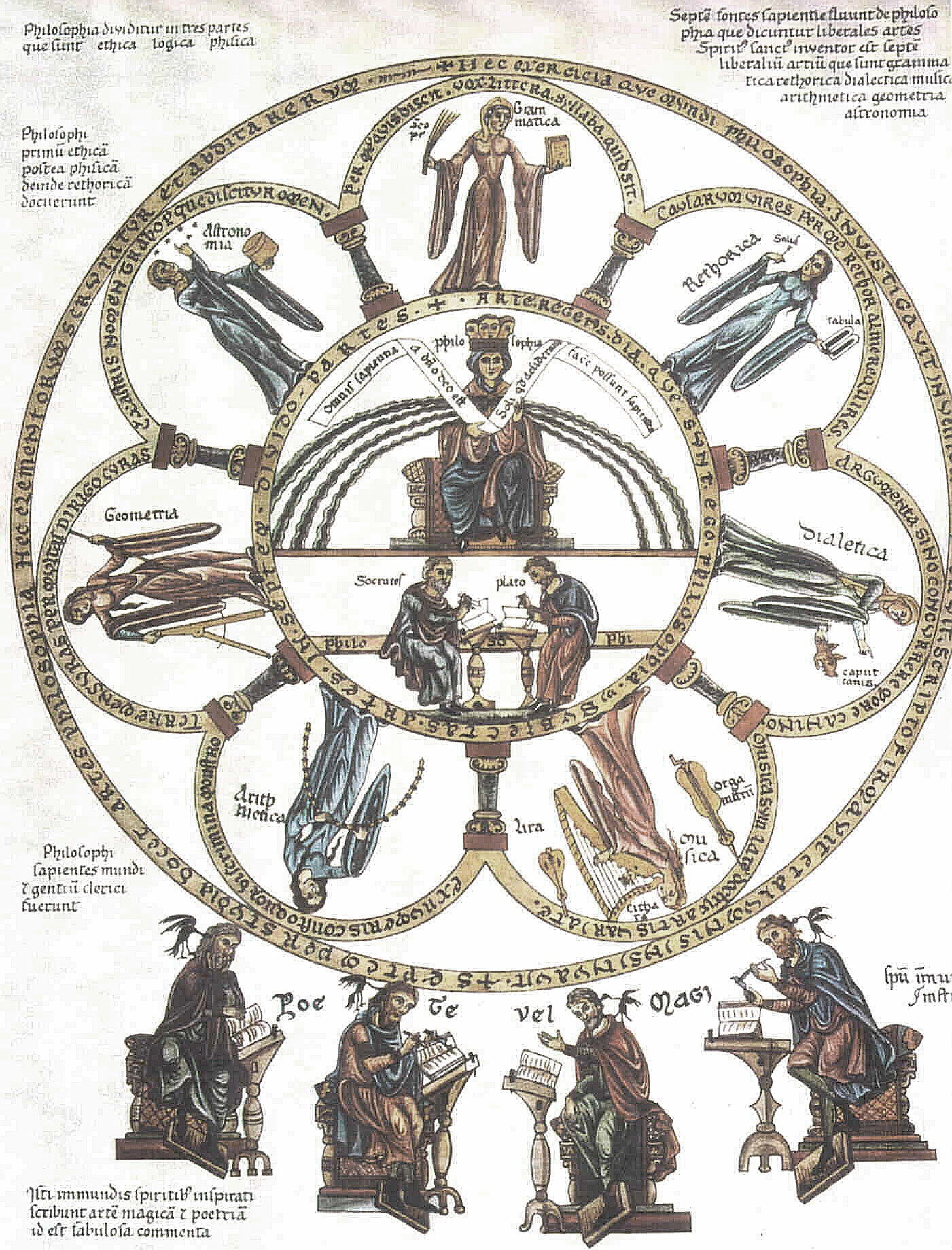
Philosophy deserves a special mention here, because it is so often sold as the royal road to wisdom. In practice, many students leave philosophy degrees more unsettled than when they started, not because confusion is always bad, but because modern academic philosophy is very good at tearing down inherited answers and very bad at building up workable replacements. Historically, philosophy either worked alongside religion or tried to fill a similar role by offering guidance on how to live. Today it often rejects that task while keeping the tools that dissolve meaning, which leaves a lot of graduates stuck in permanent doubt. For some people that disorientation is a stage they move through, but for many others it is where things stop.

A potential reply at this point is to say that the humanities still matter because of their civic and cultural role, and that they are essential for holding society together. There is some truth there, but it is often overstated. Humanities graduates do contribute heavily to education, media, policy, and cultural life, yet that does not automatically mean those contributions are always good, necessary, or load-bearing for civilisation itself. In stable times, societies can afford lots of symbolic work and internal critique. In times of stress, survival leans much more on coordination, production, and technical competence. Treating the humanities as civilisation’s last line of defence ignores the nuance that not all contributions are equally desirable or impactful. Some contributions will have a positive effect on society as a whole, but others won’t.
Language is another area where claims tend to get fuzzy. Humanities defenders often argue that deep engagement with texts leads to clearer thought, but in reality, fluent language can just as easily be used to blur thinking and push ideology without scrutiny. Precision does not come from eloquence alone; it comes from constraints, clear definitions, and being forced to face error. STEM fields are often better at that, not because their people are wiser, but because the work itself does not let you get away with hand-waving.
All of this points towards a more useful way of framing the whole issue, which is a polymathic one. There is not one ‘humanities’ and not one ‘STEM’, but many different fields with different strengths and blind spots. Studying a humanities subject does not turn you into an all-purpose critical thinker or moral guide, just as studying engineering does not make you a universal problem-solver. What really matters is how people combine fields, how much friction there is between different ways of thinking, and whether they are pushed to carry ideas across boundaries rather than staying put.
This becomes especially clear once you look at the job market. Having studied a humanities field does not, by itself, make someone employable in a broad range of roles. What raises your chances is being able to show, clearly and concretely, that you also have skills the market already values, whether that is data analysis, programming, design, project management, or some other hard-to-fake competence. When that happens, the humanities background can actually become an advantage, because you bring a mix of technical ability and interpretive insight that is hard to come by. It is the unique combination that counts.
By contrast, if someone specialises very narrowly in a humanities field and never learns how to translate their skills into other settings, their job options will naturally cluster around that same narrow field. That is not a moral failure or a market conspiracy; it is simply a consequence of not learning how to move skills across contexts. Transfer does not happen by default. It has to be practised, named, and backed up with evidence.
Some people thrive as specialists. They go deep, develop fine-grained judgement inside a narrow domain, and become very good at spotting errors and weak arguments there. Others prefer a more generalist path, picking up tools from several humanities fields, several STEM fields, or both, and learning to switch gears, abstract patterns, and connect dots. Those generalists are far more likely to develop critical thinking that travels well. Neither path is superior by default, and problems only start when one is sold as morally or intellectually higher than the other. I’ve written more about that here.
Ethics, finally, is more stubborn than universities like to admit. Formal ethics courses can sharpen concepts and language, but they rarely provide the clear-cut criteria that societies often demand for application in the real world. And, of course, the impact of ethics courses on people’s actual behaviour is arguably not that high. Upbringing, religion, law, incentives, and the wider culture do far more of that work. Treating universities as primary engines of moral formation is a modern myth, one that flatters academic institutions while ignoring where moral habits are actually formed and reinforced.
Seen this way, the humanities still have a place, but not the mystical one they are often given. They are useful tools, not moral factories or guardians of civilisation and freedom. Their real value shows up when people are free to mix and match them with other disciplines, build skills the world actually asks for and test ideas against reality.