When mathematics stops being fundamental
Human beings often talk as though mathematics and logic are woven into the fabric of reality itself. The claim is familiar: mathematics works everywhere, therefore it must be universal; logic tracks the basic structure of thought, therefore it must be inevitable; probability is the unique way to quantify uncertainty, therefore anything capable of reasoning must ultimately rediscover it.
My view pushes in the opposite direction. Mathematics, logic, and probability are not the deep grammar of the universe. They are modelling devices generated by a particular kind of mind operating in a particular environmental niche. They function extraordinarily well for us because their internal structure mirrors the regularities we can perceive and measure. But their success does not elevate them to ontological principles. It places them within the class of sophisticated heuristics—refined, coherent, consistent, and astonishingly powerful, but still tied to the contours of human cognition.
The Human Mathematical Equilibrium
Human mathematics arises from the building blocks our minds can handle: discrete objects, stable identities, spatial metaphors, binary distinctions, and quantifiable degrees of belief. These cognitive primitives shape our default axioms. Excluded middle, classical probability, and definite mathematical objects all reflect the perceptual stability we experience in the macroscopic world. When our mathematics successfully maps onto parts of physics, that is not evidence of universality; it is evidence that the parts of the universe we can access share structural features with the cognitive machinery we evolved with.
This explains the ‘unreasonable effectiveness’ of mathematics without treating it as metaphysical destiny. If two complex systems begin with similar generative rules—one being the physical environment accessible to humans, the other being the symbolic model humans construct—then convergent structures are unsurprising. They are correlations between emergent behaviours, not revelations of timeless truth. Those correlations need not obtain indefinitely, of course, as drift can take place.
The higher-intelligence argument
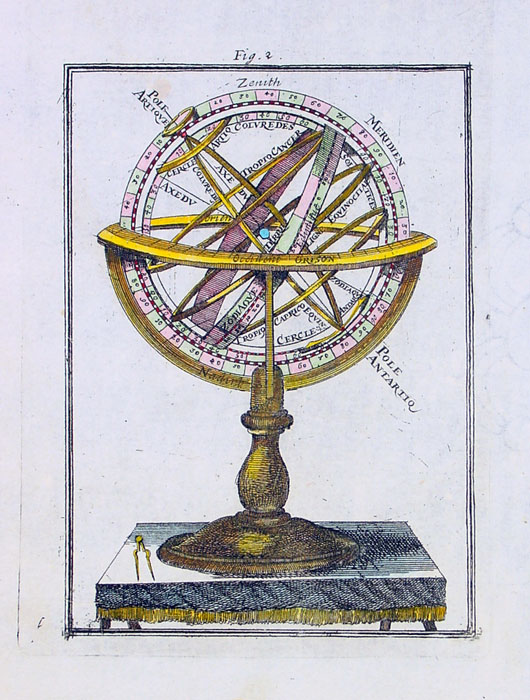
If mathematics and logic are tied to human cognitive constraints, then a being with very different constraints—an intelligence with a far broader perceptual range and deeper access to physical regimes we cannot observe—would almost certainly develop different formal systems. Our axioms could become limiting cases of a much larger landscape. What we call invariants could be local projections of deeper mechanics that do not resemble classical logic, classical probability, or even our most abstract mathematical theories.
This higher intelligence would not be ‘breaking’ mathematics. It would be operating at a different equilibrium point in the universe, one where the structures we treat as fundamental lose their privileged status. Our mathematics would still work perfectly well within our perceptual envelope. It would simply cease to be the final word.
The counterargument: Fundamental constraints
The opposing view insists that certain meta-conditions—non-triviality, coherence, stability of distinctions—are not human at all. They are said to be physical necessities for any information-bearing system. According to this perspective, even a superior intelligence must obey these constraints, because without them no entity can preserve identity, carry information, or perform structured reasoning.
This objection claims that while mathematical frameworks can vary on the surface, they cannot escape the deep constraints built into any lawful universe. A higher intelligence might reorganise mathematics, generalise it, or subsume our axioms into broader systems. But it cannot bypass the foundational requirements that make reasoning possible in the first place.
Why this counterargument falls short
The problem is that the so-called meta-conditions are themselves part of our model of what the universe must be like in order for reasoning to occur. They are abstractions drawn from the domains we can perceive and measure. A being that perceives domains beyond ours—domains in which what we call ‘distinctions’, ‘stability’, or ‘coherence’ behave differently—would not be bound by our reconstructions of these ideas.
Our account of what any intelligence ‘must’ follow is based on the operational profile of intelligences like us. If there are regions of the universe where these constraints loosen, invert, or transform, an intelligence native to those regions would structure its reasoning differently. What we describe as necessary may simply be what is necessary for us. Our meta-conditions could be special cases of a deeper logic we do not have the cognitive capacity to formulate.



A broader horizon
This view does not diminish mathematics. It situates it. Our formal systems are extraordinary achievements: tools that reveal patterns, compress worlds, and extend the reach of human intuition. But they remain tools fitted to the perceptual and conceptual machinery we happen to possess.
A richer universe may permit radically different tools—tools we are not built to imagine. And if a higher intelligence can operate with such tools, our mathematics will take its place not as the universal skeleton of reality, but as one elegant modelling language among many, valid within its domain but not the key to all domains.
This perspective reframes mathematics not as the final architecture of the cosmos, but as a remarkable human equilibrium point: deep, powerful, and beautiful, yet ultimately bounded by the slice of the universe that human minds can access and comprehend.