When messiness is its own kind of order
People often talk about messiness and order as if they are natural enemies. One stands for chaos, the other for control. It is a neat contrast, but it misses how people actually live. Plenty of ‘messy’ people have a system—just not one that fits the usual boxes, shelves, and colour-coded dividers. Their way of organising grows out of how they think and move, not out of what a shop sells in the home-office aisle.
Most mainstream organising methods are built around external categories. You’re given a preset list of categories and are asked to decide what belongs where and stick to it. Once the system is in place, it’s supposed to scale easily, stay predictable, and allow anyone else to make sense of it. That works well for people whose thinking fits those categories. But for others, these systems feel like wearing shoes in the wrong size: technically functional, but uncomfortable enough that you start avoiding them. For people who thrive in non-linear and complex thinking, the ideal organising method evolves like a jungle, it doesn’t stay put like a house garden.

Non-linear personal systems grow differently. They emerge from use rather than planning. Objects end up where they’re actually needed. Distinctions that don’t matter in daily life—like separating clean clothes from ‘clean enough’ clothes—collapse into one. The whole thing looks improvised, but there is usually a logic underneath it.
One common worry is that this kind of system doesn’t scale. That once life becomes busier, the whole mess implodes. But a personal system doesn’t need to stretch indefinitely. When it stops working, it can be rebuilt. The earlier version doesn’t have to evolve; it can simply be replaced. Scalability, in this sense, comes from the ability to start again.
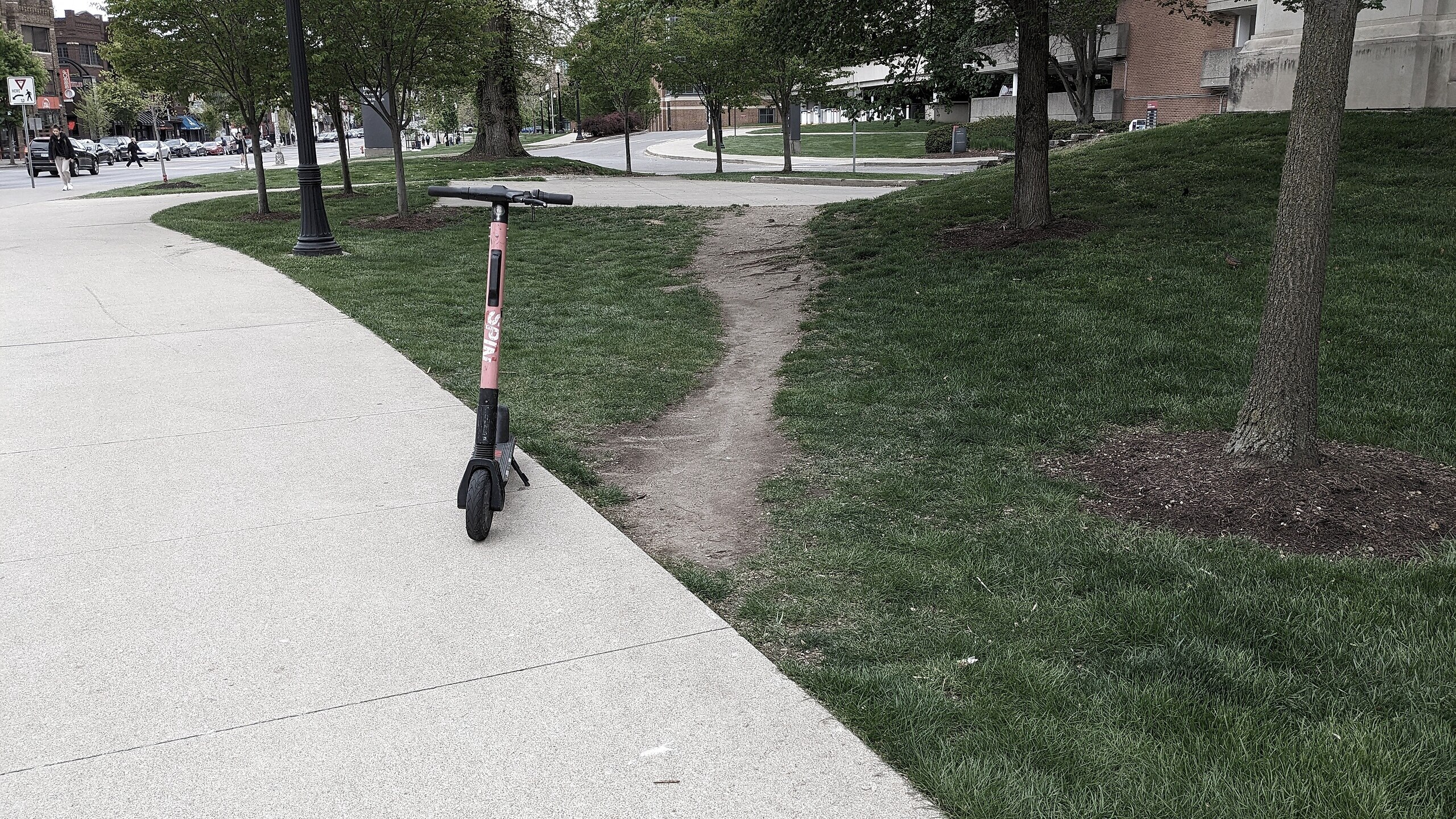
There’s a useful analogy in the desire paths you see on university campuses. People ignore the official pavements and walk where it makes sense to walk. Over time, those routes become the real ones. Some universities even pave them later, accepting that the unofficial path works better than the planned one. Personal organisation works the same way. The messy system that once lived entirely in your head can, once it stabilises, be turned into something more structured—custom shelves, odd-sized drawers, whatever lets your own logic take physical form.
The advantage of this approach is that it reflects how you actually live. The weakness is that it relies heavily on memory and habit. Someone else won’t be able to navigate it, and even you might struggle after a long break. Still, this does not mean the system is inferior; it simply means it follows a different logic.
Linear systems often get automatic credit for being more aesthetically pleasing, but that is mostly a matter of convention. A non-linear organising system can look just as intentional and attractive once it is given the right physical form. When you translate your own logic into shelves, drawers, or layouts that match how you actually use things, the result can be just as clean and visually coherent as any standard setup. The beauty comes from clarity of purpose, not from following a predefined grid.
In the end, the contrast between messiness and order is exaggerated. What matters is fit. A system is orderly when it lines up with the way you think and the way you use your space. Some people find that alignment in a neat grid of categories. Others build it gradually through use, improvisation, and revision. The result may not look ‘organised’ in the traditional sense, but it can be exactly the right kind of order for the person who made it.