Design for how people learn, by Julie Dirksen
A few years ago, when I first picked up Julie Dirksen’s Design for How People Learn, I treated it like a technical manual. I expected a straightforward guide on how to organise information and present it clearly. Instead, I found myself wrestling with every chapter. I remember sitting with the book, highlighting entire paragraphs and taking notes every three lines just to keep up. It felt radical and, at the time, deeply counterintuitive.
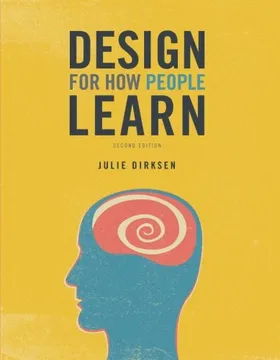
The core of what Dirksen was trying to tell me was that most of us are remarkably lazy when we try to teach others. We take the path of least resistance by focusing on what people need to know. We build slide decks, we write manuals, and we assume that because we’ve delivered the information, our job is done. Dirksen’s actual subject matter demands something much harder. She insists that we must be diligent in pinpointing exactly what it is we want people to do.
Planning for action is exhausting work. It requires you to look past the content and analyze the friction of real life. You have to ask if the learner is failing because they lack a skill, or because they lack the motivation, or simply because their environment makes success impossible. Unless your only goal is to make people know a few isolated facts, skipping this analytical heavy lifting guarantees an unsatisfactory educational experience. Back then, this felt like a massive, jarring shift in how I viewed my work.
But then, something strange happened.
A few weeks ago, I took the book off my shelf to re-read it. It is a truly excellent book, one that I keep recommending time and again. It marked a before-and-after moment for me and my work as a learning experience designer and university professor. Naturally, I expected to dive back into those complex, challenging ideas. Instead, I felt a wave of shock for an entirely different reason. As I turned the pages, I felt that everything in the book seemed blatantly, almost appallingly, obvious. I looked at my old highlights and wondered why I had ever found those points so difficult to grasp. It felt like I was reading a book that stated that the sky is blue or that water is wet.
This realisation hit me harder than the technical content ever did. It was a visceral lesson in the ‘curse of knowledge.’ Over time, those radical ideas had quietly become my common sense. I had internalised them so deeply through experience and self-reflection that I could no longer remember what it felt like to not know them. I think that’s another great thing about Dirksen. She managed to make counterintuitive claims perfectly intuitive for me (ie, she’s a great educator).
That discovery made me stop and think about the world at large. It made me realise how often I walk through life assuming that my ‘obvious’ is everyone else’s ‘obvious.’ When you are talking to your family or friends and they find your points jarring or counterintuitive, a first instinct is to be frustrated. But this book, in this indirect way, taught me that most people aren’t trying to be difficult; they just haven’t engaged with the same thinkers or experiences that you or I have.
We share the same physical world, but we make sense of it through entirely different lenses. What is a fundamental truth to me might be a confusing, alien concept to someone I love, and vice versa. It has reminded me that dialogue isn’t about being right or wrong. It’s about having the empathy to realise where someone else’s gap is, and also the insight to realise where my own gaps are. Now, when I find myself in a disagreement, I try to remember that feeling of struggling with Dirksen’s book years ago. It’s always a good idea to keep an open mind and try to understand why people aren’t getting your point, and also ask them to explain their own claims in detail so that you understand why you aren’t getting theirs.